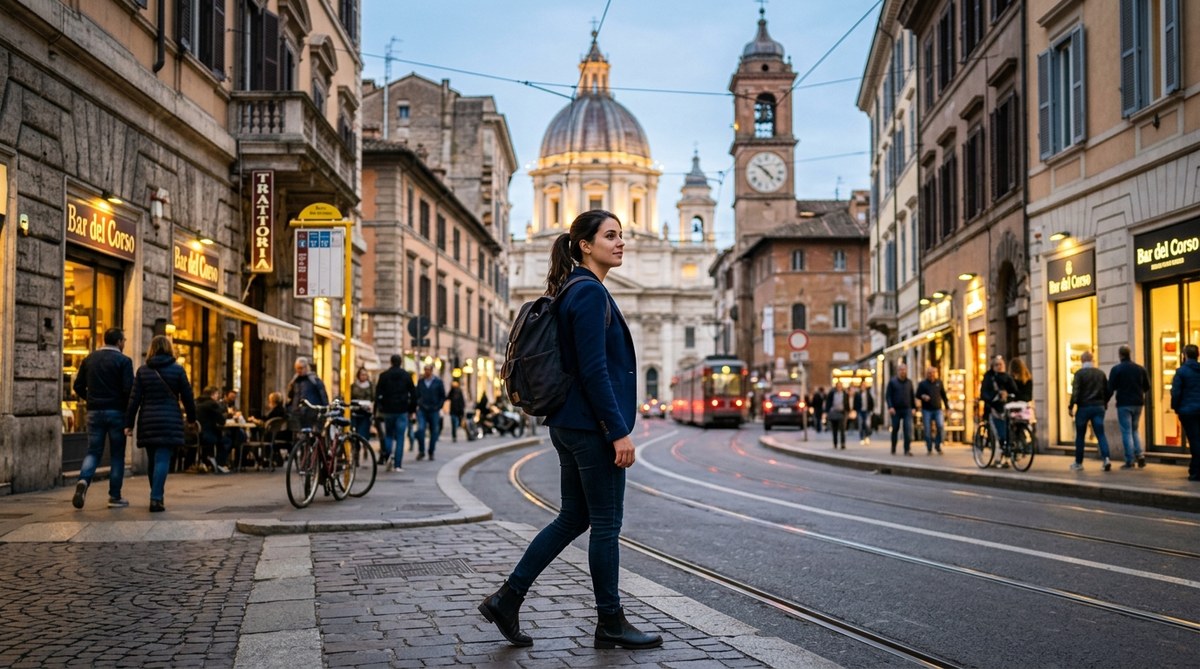
Navigating a busy city without a map might sound challenging, but with the right techniques, you can become confident in your ability to find your way. Whether you’re trying to disconnect from digital devices or simply want a more immersive experience, mastering natural navigation skills transforms urban exploration into an enjoyable adventure. Instead of constantly checking your phone, learn how to read your surroundings, recognize landmarks, and use simple tools to stay oriented. This guide will walk you through practical, easy-to-apply methods to navigate confidently without a map.
Navigating urban environments without a map relies on understanding your surroundings, recognizing landmarks, and using natural cues. With practice, you can find your way confidently, stay safe, and enjoy a more engaged exploration of the city.
How to Navigate a city without a map using practical methods
Getting around a city without a traditional map involves honing your senses and applying simple techniques. These methods are accessible and effective, allowing you to rely on your environment instead of digital tools.
1. Use natural cues like the sun and shadows
The sun is your most consistent natural compass during daylight. By observing its position, you can determine approximate directions.
- Sun’s position during the day: The sun rises in the east and sets in the west. In the northern hemisphere, the sun is generally in the southern part of the sky at midday.
- Shadow method: Place a stick upright and mark the tip of its shadow in the morning and afternoon. The shortest shadow occurs around noon, pointing roughly north-south.
- Analog watch technique: If you have an analog watch, point the hour hand at the sun. The midpoint between the hour hand and 12 o’clock points south in the northern hemisphere.
Expert tip: Practice these techniques on a clear day to develop an intuitive sense of direction. Over time, you’ll start to use the sun naturally to orient yourself.
2. Recognize and follow landmarks and street features
Landmarks are visual cues that anchor your sense of location.
- Identify distinctive buildings: Skyscrapers, churches, statues, or unique storefronts serve as navigation points.
- Observe street elements: Noticing street signs, shop signs, or unique pavement patterns helps confirm your position.
- Use recurring features: Park layouts, bridges, or rivers are reliable guides.
3. Understand the layout of the city
Familiarize yourself with the city’s general structure.
- Grid patterns: Many cities are laid out in a grid, making navigation easier once you recognize the pattern.
- Major roads and avenues: These often run straight and connect key areas, serving as reliable routes.
- Natural features: Rivers, parks, and hills influence street placement and can act as natural guides.
4. Develop a mental map and use spatial memory
Building a mental image of your surroundings helps you navigate without references.
- Note key intersections: Remember where important landmarks, shops, or stations are located.
- Remember street orientations: Knowing whether streets run north-south or east-west helps orient your mental map.
- Use “attack points”: Pick a prominent feature and plan your route relative to it.
5. Practice dead reckoning in urban settings
Dead reckoning involves estimating your position based on your movements.
- Count your steps: Measure how far you travel from a known point.
- Note turns and distances: Keep track of lefts and rights, as well as the number of blocks traveled.
- Use backtracking: If you get lost, retrace your steps to a familiar point.
Techniques to avoid common navigation mistakes
| Mistake | Explanation | How to avoid it |
|---|---|---|
| Relying solely on your phone | Batteries die, signals drop | Always have a backup plan and natural cues |
| Ignoring landmarks | Missing visual cues leads to confusion | Constantly observe surroundings and memorize distinctive features |
| Forgetting your starting point | Losing track of orientation | Use prominent landmarks as reference points |
| Misjudging distances | Overestimating or underestimating how far you’ve traveled | Count steps or use visual cues like street length |
Practical tips for urban navigation without a map
- Plan your route beforehand: Identify key landmarks and general directions.
- Use multiple techniques: Combine sun position, landmarks, and dead reckoning.
- Stay aware of your environment: Keep looking around, not just at your destination.
- Practice regularly: The more you navigate using natural cues, the better you become.
“Understanding your environment and recognizing natural cues can make you less dependent on devices. Practice makes perfect, and soon you’ll navigate confidently even in unfamiliar parts of the city.” — Urban explorer and seasoned navigator
Mistakes to watch out for when navigating without a map
| Technique | Common mistake | How to fix it |
|---|---|---|
| Sun navigation | Misreading the sun’s position | Practice on clear days; learn to recognize solar patterns |
| Landmarking | Relying on a single landmark | Cross-reference with multiple features for confirmation |
| Dead reckoning | Losing track of your steps | Use landmarks and street features to verify your position |
| Relying on intuition | Going off course | Always check your surroundings and backtrack if necessary |
Staying safe and confident in city navigation
- Stay aware of your surroundings: Avoid distractions and keep track of landmarks.
- Have a plan: Know your starting point and destination, and identify key reference points.
- Practice in familiar areas: Test your skills in neighborhoods you know before venturing into new parts.
- Carry essentials: A small notebook or a simple compass can supplement your natural techniques.
The art of natural urban navigation
Mastering urban navigation without a map is both empowering and fun. It turns city exploration into an engaging puzzle, sharpening your senses and intuition. As you practice recognizing landmarks, using the sun, and building mental maps, you’ll find yourself more confident and less reliant on technology. Remember, every city has its unique features, and learning to read them transforms how you experience urban environments.
Take time to observe your surroundings carefully. Over days and weeks, your ability to navigate naturally will grow stronger. The city becomes less intimidating, more like an intricate maze waiting to be understood through your observations.
Final thoughts on independent city exploration
Navigating without a map opens up a new way to connect with the urban landscape. It encourages you to look up from screens and truly engage with your environment. Whether you’re wandering through a new neighborhood or rediscovering your hometown, these techniques make every exploration richer. Practice often, stay curious, and enjoy the journey of becoming your own urban navigator.