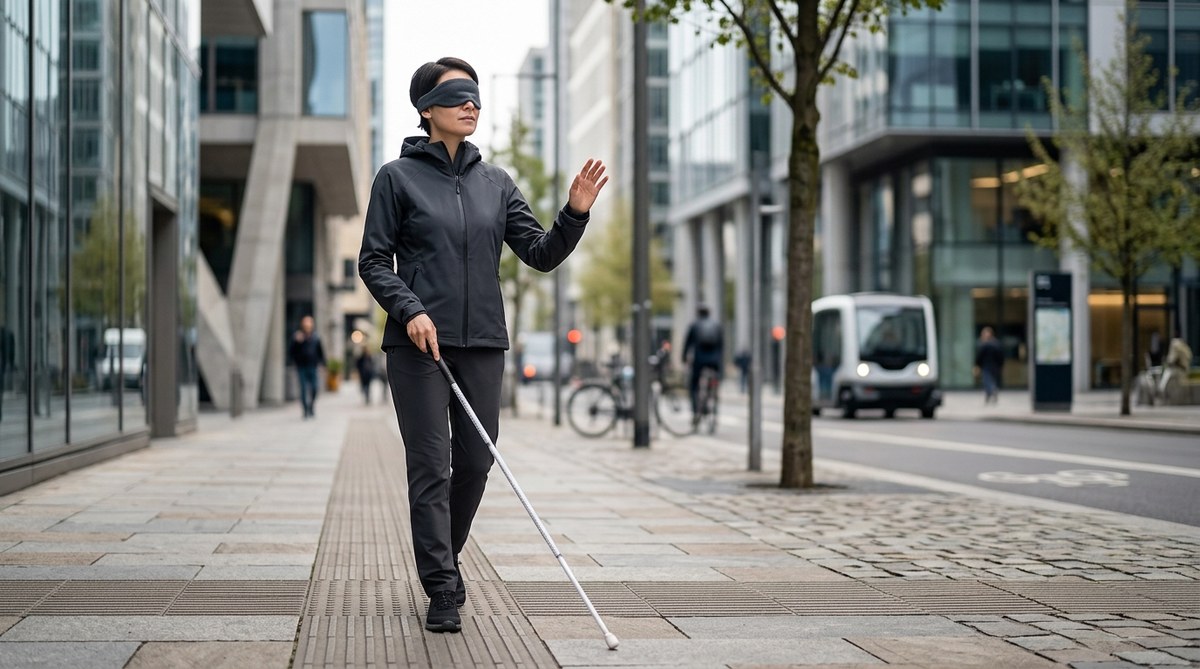
Imagine walking through downtown Chicago with your eyes closed. You feel the sun on your left cheek, hear the rumble of the L train shifting direction, and smell the mix of pretzels and exhaust from a nearby corner. In that moment, you know exactly where you are. This isn’t a party trick. It is a skill called sensory wayfinding, and it is more useful than ever in 2026.
Sensory wayfinding techniques use hearing, smell, touch, and spatial memory to navigate without depending on a phone screen or GPS. By training your brain to read urban cues like foot traffic patterns, street gradients, reflective sounds, and distinct scents, you can move through any city with confidence. This guide breaks down five core techniques, common mistakes, and a practical process to start practicing today.
Why Your Ears Are Better Than Your GPS
Your phone battery dies. The signal drops. A construction detour blocks your usual route. In those moments, your senses become your most reliable navigation tool. Sensory wayfinding techniques rely on the fact that every city has a unique sensory signature. You just need to learn how to read it.
Think about the last time you walked through New York City. You likely heard the hiss of a bus braking before you saw it. You felt the change in pavement from concrete to cobblestone as you entered the Financial District. You smelled the salt from the Hudson River when you got close to the water. These cues are free, always available, and never need an update.
The Five Core Senses of Urban Navigation
Let’s break down the primary sensory channels you can use to find your way. Each one offers a different layer of information.
Hearing: The City’s Audio Map
Sound is one of the most reliable sensory wayfinding techniques because it travels around corners and through walls. You can hear a subway entrance before you see it. You can listen for the echo of a tunnel to know you are approaching an underpass.
- Traffic noise changes density as you move from a side street to a main avenue.
- The pitch of a train horn or bus engine can tell you if it is moving toward you or away.
- Pedestrian chatter in a plaza versus a quiet alley gives you immediate context.
Try this: stand still at a busy intersection in your city. Close your eyes for 30 seconds. Notice how many layers of sound you hear. The closest sounds are immediate hazards. The mid-range sounds tell you what is around the block. The distant hum is the city’s baseline.
Smell: The Olfactory Landmarks
Your nose can guide you with surprising accuracy. Cities have distinct smell zones. In San Francisco, the scent of sourdough from bakeries near the wharf marks a specific district. In Seattle, the damp wood smell of Pike Place Market is unmistakable.
- Bakeries and coffee shops act as fixed scent markers.
- River or ocean smells tell you which direction is water.
- Industrial areas carry oil, metal, or chemical odors.
- Parks and gardens bring fresh plant smells that break up the urban scent landscape.
Touch: Reading the Ground and Air
Your feet and skin collect data constantly. The texture of the ground changes between blocks. Smooth concrete gives way to rough asphalt. Brick sidewalks often indicate historic districts. Rubberized pavement usually means a pedestrian crossing or a school zone.
Wind patterns also matter. Cities create wind tunnels between tall buildings. A steady breeze from one direction might indicate a large open space like a park or a waterfront. If the air feels still and warm, you are likely in a narrow, sheltered street.
Sight (Even When Limited)
Sensory wayfinding techniques include vision, but not in the way you might think. You are not looking for street signs. You are looking for patterns.
- The angle of shadows tells you the time of day and your orientation relative to the sun.
- Building materials change by neighborhood. Brick in older areas, glass and steel in business districts.
- Street furniture like lampposts, trash cans, and bus stops can be uniform within a city zone.
Proprioception: Your Internal Compass
This is your sense of body position and movement. You know when you are walking uphill even if you cannot see the slope. You feel the slight turn of your body as you follow a curved street. This sense is trainable. With practice, you can build a mental map of a neighborhood using only the feeling of your steps.
A Step by Step Process to Start Practicing
You do not need to be blindfolded to learn these skills. Start with small, safe exercises.
- Choose a familiar route. Pick a walk you do every day, like from your apartment to the subway station.
- Close your eyes for 10 seconds at three points along the route. At each stop, name three sounds and one smell you notice.
- Walk the route without looking at your phone. Use only your senses to confirm you are on track.
- Add a small variation. Take a detour one block over and use sensory cues to find your way back to the main route.
- Repeat the process on a new route in a different part of town. Try a neighborhood you do not know well.
- Challenge yourself with a blindfolded walk in a safe, controlled space like a park or a pedestrian mall. Have a friend spot you.
Common Mistakes and How to Fix Them
Even experienced urban explorers make errors when relying on their senses. Here is a table of the most common pitfalls and the corrections.
| Mistake | Why It Happens | The Fix |
|---|---|---|
| Trusting a single sound cue | Construction or events can change the soundscape | Cross reference with touch and smell |
| Ignoring wind direction | Wind shifts by season and time of day | Use wind as a secondary cue, not primary |
| Over relying on scent | Rain washes away smells, wind carries them away | Stick to fixed scent sources like bakeries |
| Walking too fast | Speed reduces your ability to process cues | Slow down every few blocks to scan |
| Forgetting your starting orientation | You lose track of the sun’s position | Check your shadow angle at the start |
Building a Mental Map Using Sound and Scent
You can create a mental map of any neighborhood in about 15 minutes. Stand at a central point and listen. Identify the loudest sound. That is your anchor. In most cities, that anchor is a major road or a train line.
Next, find a scent anchor. A bakery, a coffee roaster, or a flower shop works well. These are fixed points that will not move.
Now draw a mental triangle between your anchor sound, your anchor scent, and your starting position. As you walk, keep that triangle in mind. When you turn a corner, notice how the sound changes. Does the traffic get louder or softer? Does the bakery smell fade? That tells you if you are moving toward or away from your anchors.
“The best navigators I have trained never rely on just one sense. They layer them. Sound gives you distance. Smell gives you direction. Touch gives you confirmation. When you combine all three, you are never lost.” — Dr. Elena Vasquez, Urban Perception Researcher at MIT.
Sensory Wayfinding in the Digital Age
In 2026, we have more tools than ever. Smartwatches can give haptic feedback to guide you. Accessible navigation apps use audio cues. But these tools work best when your natural senses are already sharp.
You can combine tech with your senses. For example, use a voice navigation app to get the general direction, then turn off the screen and use your ears and nose to confirm each turn. This hybrid approach builds your skills while keeping you safe.
If you want to go deeper, try practicing in a city you have never visited. Arrive at a train station, turn off your phone’s map, and navigate to a specific landmark using only sensory cues. You will be surprised how far you can get.
The Sensory Toolkit for Any Urban Explorer
Here is a bulleted list of items and habits that support sensory wayfinding.
- A lightweight notebook to sketch sound maps after each walk
- Noise canceling headphones used only for quiet moments, never while walking
- A small compass to confirm your orientation when you are unsure
- Walking shoes with good ground feel, not thick soles
- A habit of pausing at every intersection to scan for three sensory cues
- A buddy system for practicing blindfolded walks safely
Putting It All Together in Your City
You do not need to live in a major metropolis to practice. Suburban streets, college campuses, and even small towns have sensory signatures. The key is consistency. Practice one technique per week.
Week one: focus only on sound. Week two: add smell. Week three: include touch. By week four, you will notice details you have missed for years. That crack in the sidewalk, the specific pitch of the train horn, the scent of a particular tree lining the street. These are your waypoints.
For more structured training, check out our guide on mastering urban wayfinding techniques for confident city navigation in 2026. It pairs perfectly with the sensory methods covered here.
Your Senses Are Already Working
You have been using sensory wayfinding techniques your whole life without realizing it. Every time you know you are close to your favorite coffee shop before you see it, every time you feel the change in pavement and know you are near the park, you are navigating by senses. The only difference now is that you are doing it on purpose.
Start small. Take a familiar walk today with your phone in your pocket. Listen. Smell. Feel the ground. You already know more than you think.