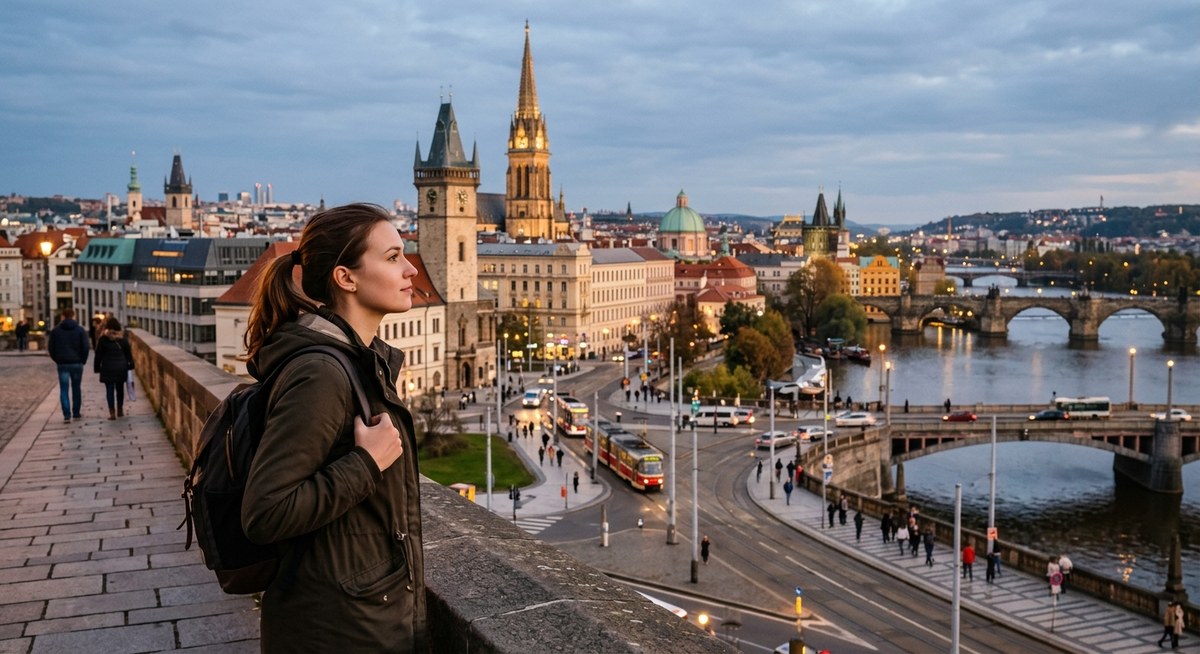
Getting around a busy city can feel overwhelming, especially if you’re trying to do it without a digital map or GPS. Yet, many seasoned travelers and urban explorers find that relying on natural landmarks and spatial cues makes navigation more intuitive and enjoyable. It turns city wandering into a fun puzzle, a way to connect more deeply with your surroundings. If you want to master this skill, you’re about to discover practical techniques that turn your environment into a personal navigation guide.
Using natural landmarks and spatial cues allows you to navigate cities confidently without maps. Develop awareness of your environment, recognize prominent features, and practice mental mapping to become more self-reliant in urban areas. This approach makes exploring more engaging and helps you develop a stronger connection to the city around you.
How to navigate cities without relying on maps or digital tools
Navigating a city without a map might seem daunting at first. But with a few mindset shifts and practical techniques, you can confidently find your way around using what nature and the urban landscape offer. This method emphasizes observation, memory, and spatial awareness over technology.
1. Start by observing key landmarks
The foundation of natural navigation begins with keen observation. Pay attention to distinctive features in your surroundings. These could be tall buildings, unique statues, bridges, parks, or even a specific tree or mural. The goal is to identify features that stand out and won’t be mistaken for anything else.
Tips for spotting useful landmarks:
– Look for features that are visible from multiple angles.
– Choose landmarks that are unlikely to change quickly.
– Remember their relative positions to each other.
Noticing these details turns your environment into a mental map. As you walk, mentally note how landmarks relate to each other. For example, “the clock tower is on my left, and I see the park ahead.”
2. Develop your mental map using spatial cues
Once you’ve identified landmarks, create a mental image of their locations. Think of it as drawing an invisible map in your mind. The key is to use spatial cues such as distance, angles, and relative position.
Practical process:
– Pick a starting point. Familiarize yourself with nearby landmarks.
– As you move, note how landmarks shift in position.
– Use directional cues like the sun, shadows, or street layout to maintain orientation.
– Confirm your mental map by periodically checking landmarks.
This ongoing process helps solidify your internal representation of the city, making it easier to navigate without external tools.
3. Use natural cues and urban features for orientation
Natural cues like the sun and shadows can be your compass. The sun rises in the east and sets in the west, giving you directional clues during daylight hours. Shadows cast by buildings can also help determine the time of day and direction.
Urban features can serve as navigational anchors:
– The flow of traffic and street patterns.
– The placement of parks, rivers, or waterfronts.
– Unique storefronts, murals, or architectural styles.
By combining these cues, you can stay oriented and find your destination confidently.
4. Practice common techniques to improve your skills
Here are some tried-and-true methods to sharpen your awareness:
- Landmark triangulation: Use three prominent features to pinpoint your location. Imagine drawing a triangle connecting these features; your position is within that triangle.
- Route memorization: When walking a new route, memorize key landmarks along the way. Repeating this mentally helps reinforce your mental map.
- Landmark association: Associate landmarks with specific directions or destinations. For example, “the bakery is on the corner after the park,” helps in recalling routes.
5. Practice regularly and refine your approach
Like any skill, natural navigation improves with practice. Start in familiar areas, then gradually venture into new neighborhoods. Over time, you’ll notice patterns and develop a stronger sense of spatial awareness.
Tips for consistent practice:
– Take mental notes during walks.
– Challenge yourself by navigating without checking your phone.
– Share your experiences with fellow explorers for feedback.
Common pitfalls and how to avoid them
| Technique | Mistake | How to avoid it |
|---|---|---|
| Relying on a single landmark | Overdependence on one feature | Always cross-check with multiple landmarks |
| Forgetting the relative positions | Confusing landmarks | Mentally revisit the environment to reinforce relationships |
| Ignoring natural cues | Losing orientation | Use the sun, shadows, and environmental cues intentionally |
| Not practicing enough | Deteriorating skills | Regularly challenge yourself in different parts of the city |
“Building your mental map through observation and spatial cues transforms city exploration into an engaging adventure. Focus on your environment, and navigation becomes second nature.” — urban explorer and navigation enthusiast
Enhancing your urban navigation toolkit
While relying on landmarks is effective, combining this with other techniques increases your confidence.
- Use environmental cues: Shadows, sounds, and smells can help confirm your position.
- Create a mental story: Turn your route into a narrative, making it easier to recall.
- Engage your senses: Notice textures, colors, and sounds to anchor landmarks in your memory.
- Maintain a flexible mindset: Be ready to adapt if a landmark is obscured or changes.
Practical example of a landmark-based route
Suppose you want to reach a cafe near the river. You might:
– Identify the tall clock tower on your way.
– Use the bridge over the river as a reference point.
– Recognize a mural on the building opposite the cafe.
– Use the sun’s position to confirm you’re heading east during the afternoon.
By mentally connecting these points, you navigate smoothly without needing a map.
Final thoughts on mastering city navigation with landmarks
Developing the skill to navigate cities without maps is empowering. It deepens your connection with your environment and turns urban wandering into a mindful experience. Start simple by observing and memorizing key features. Gradually, your internal map becomes more detailed and reliable. Remember, practice makes perfect and every walk is an opportunity to sharpen your skills.
Building these habits turns city exploration into a game of discovery. Each new neighborhood becomes a puzzle waiting to be solved with your keen eyes and sharp mind. As you become more attuned to your surroundings, navigating without a map feels less like a challenge and more like a natural part of your urban adventures.
Happy wandering, and may your journeys be filled with interesting sights and confident steps!