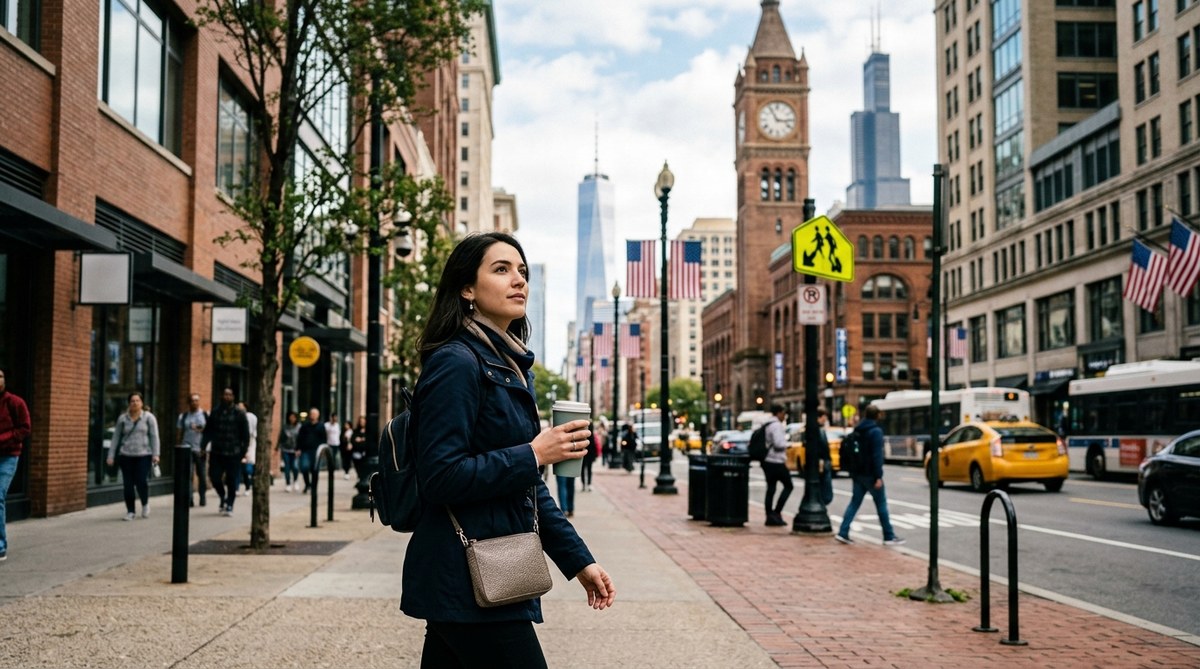
Navigating a new city can feel overwhelming. Streets, neighborhoods, and landmarks seem to blur together when you’re unfamiliar with the area. Relying solely on maps or GPS can sometimes disconnect you from your surroundings. Instead, developing your senses and observing landmarks can transform how you find your way. This approach makes urban exploration more intuitive and engaging. It turns every trip into a chance to learn and connect with the environment around you.
Using your senses and landmarks to navigate in a U.S. city helps you become more aware of your surroundings, making travel more natural and less dependent on technology. Practice observing sights, sounds, and smells, and you’ll find your way with confidence and ease.
Getting to know a city without constantly looking at a map may seem challenging at first. But once you understand how to tune into your senses and recognize key landmarks, navigating becomes second nature. Here are some practical steps and tips to help you master this skill.
How to start navigating using senses and landmarks
-
Identify prominent landmarks
Begin by spotting major landmarks around you. These can be tall buildings, statues, bridges, unique storefronts, or large parks. Notice their shapes, colors, and positions relative to your current location. For example, in New York City, the Empire State Building stands out against the skyline. Recognizing such features helps anchor your mental map. -
Pay attention to sensory cues
Use all your senses to gather information. Listen for sounds like traffic patterns, street musicians, or distant sirens. Smell the aroma of food from a nearby restaurant or fresh coffee. Notice the textures of building facades or the feel of the pavement under your feet. These cues reinforce your sense of place and help you stay oriented. -
Connect landmarks with sensory details
As you move, associate landmarks with specific sensory impressions. For instance, when passing a bakery, remember its smell or the sound of clattering dishes. When approaching a park, notice the scent of trees or the feel of grass underfoot. These associations make it easier to recognize locations later.
Practical process for navigating using landmarks and senses
-
Observe your surroundings before moving
Take a moment to scan your environment. Identify noticeable features and listen for distinctive sounds. This initial observation creates a mental snapshot of your location. -
Use landmarks as reference points
While walking, keep track of landmarks you pass. For example, a colorful mural, a unique streetlamp, or a distinctive storefront can serve as navigational cues. Remember their position relative to your intended destination. -
Build a mental route
Create a mental picture of the path. For example, “I turn left at the red brick building, walk past the park, then pass the coffee shop with the blue sign.” Mentally reinforcing this route helps you stay on track without needing a map. -
Adjust based on sensory feedback
If you feel lost, re-engage your senses. Listen for familiar sounds, smell nearby food, or notice textures under your feet. These cues can guide you back to your route.
Common mistakes and how to avoid them
| Mistake | How to avoid it | Why it matters |
|---|---|---|
| Relying only on visual landmarks | Use multiple senses, including sound and smell | Enhances awareness and reduces confusion |
| Ignoring environmental changes | Pay attention to how landmarks and cues evolve | Keeps your mental map accurate |
| Not updating your route | Continuously observe and adapt | Prevents getting lost in unfamiliar areas |
Techniques for improving your sense-based navigation
-
Create sensory maps: Practice recalling landmarks along your route, emphasizing what you see, hear, and smell. This strengthens your mental association with the environment.
-
Use landmark clusters: Recognize groups of landmarks rather than relying on a single feature. For instance, a park surrounded by cafes and statues provides multiple cues.
-
Practice in familiar areas: Before tackling complex neighborhoods, hone your skills in familiar surroundings. Notice the details that make your neighborhood unique.
-
Engage with locals: Ask residents for landmarks or sensory cues that help them navigate. Their insights can reveal hidden features you might overlook.
“The key to mastering sensory navigation is active observation. Take time to notice the details others might ignore. This awareness transforms how you experience a city.” — urban explorer and navigation expert
How to develop your awareness and observation skills
| Technique | Description | Benefit |
|---|---|---|
| Sight-seeing with intention | Instead of rushing, slow down and look around deliberately | Improves detail recognition |
| Sound mapping | Listen to the ambient sounds and identify their sources | Helps orient yourself in noisy environments |
| Smell identification | Recognize distinctive scents associated with specific locations | Reinforces memory and orientation |
Final tips for confident urban wandering
- Practice regularly. The more you engage your senses, the sharper your navigation skills become.
- Combine senses. Use sight, sound, smell, and touch together for richer awareness.
- Be patient. Developing this skill takes time, but it pays off with more enjoyable, spontaneous adventures.
- Keep a mental note of distinctive features and sensory cues every time you visit a new neighborhood. Over time, your internal map grows richer and more reliable.
The joy of sensing your way through a city
Learning to navigate a U.S. city using your senses and landmarks turns urban exploration into a personal adventure. It makes you more aware of your environment and less dependent on devices. With practice, you’ll find yourself moving confidently through unfamiliar streets, appreciating the unique details that make each neighborhood special. This approach invites you to truly experience the city on a sensory level, transforming routine trips into memorable journeys.
Keep discovering your city one sense at a time
Start small. Choose a neighborhood or area you visit often and notice what makes it distinct. Pay attention to sights, sounds, smells, and textures. As you build your sensory awareness, navigating any city becomes more intuitive and enjoyable. Remember, every trip is an opportunity to learn more about the environment around you. Embrace your senses and see how they can guide you through the bustling streets of any U.S. city with confidence.