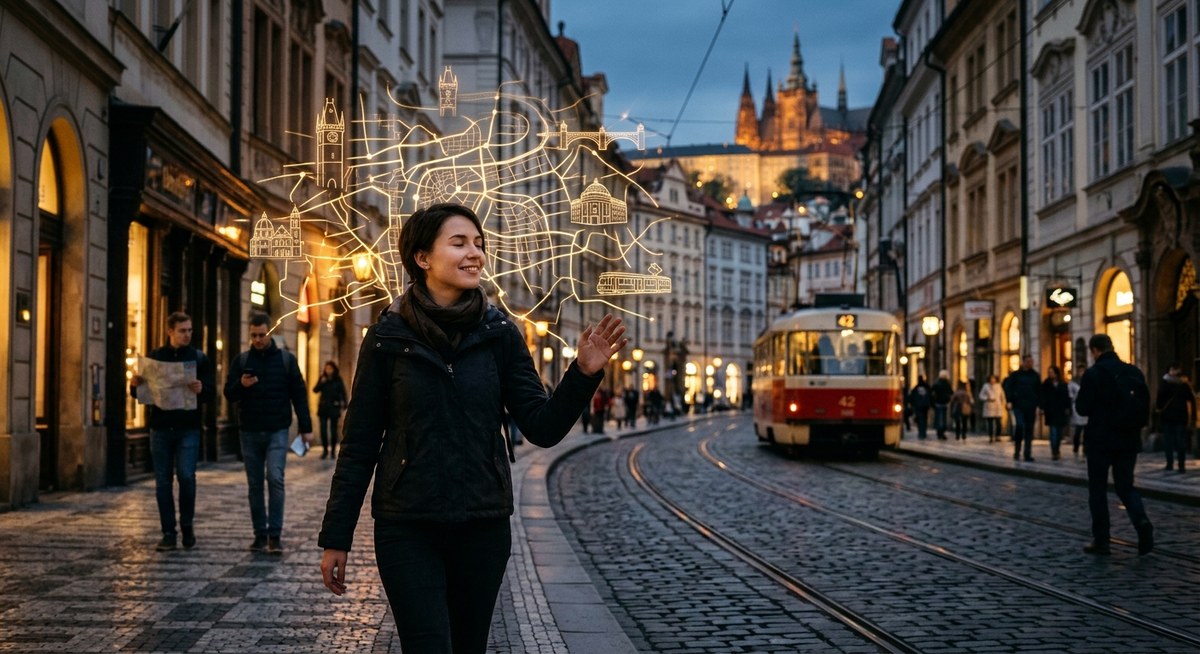
Imagine stepping off the train in an unfamiliar city. Your phone battery just gave out. No GPS. No map. For a moment, your stomach drops. Then you look up, take a breath, and realize you already have everything you need. Your eyes, your ears, your sense of direction. The city is full of clues, if you know how to read them. Learning to navigate a city without GPS is not a lost art. It is a skill you can rebuild, one street corner at a time.
You can confidently navigate any city without GPS by training your brain to build a mental map. Start by noticing landmarks, learning street patterns, and using cardinal directions. Practice turning off turn-by-turn navigation on short trips. Over time, your spatial memory sharpens, and you gain freedom from phone dependence. The techniques in this guide will help you feel at home anywhere.
Why Your Brain Craves Map-Free Navigation
Relying on a GPS every time you step outside quietly shrinks your hippocampus. That is the part of your brain responsible for spatial memory and navigation. A 2026 study published in Nature Neuroscience showed that people who regularly use turn-by-turn directions have less gray matter in that region compared to those who navigate on their own. The good news: the effect is reversible.
When you navigate without GPS, you build a cognitive map. You start to see relationships between streets, landmarks, and neighborhoods. You notice the sun’s position and the flow of traffic. You become an active participant in your environment instead of a passive follower of a blue dot.
For travelers and new city residents, this skill is pure gold. You learn a city faster. You feel more confident exploring side streets. You never panic when your phone dies. And for memory enthusiasts, this is one of the most rewarding mental workouts you can do.
The Core Skill: Building a Mental Map
Your brain is wired for place memory. You just haven’t exercised it lately. Start by turning your daily commute or walk to the grocery store into a mental exercise. Instead of pulling up Google Maps on your phone, try to recall the route from memory. Use these techniques to strengthen your internal compass.
1. Anchor Yourself with Strong Landmarks
A landmark works best when it is permanent, visible, and unique. Think of a bright red fire hydrant, a statue in a square, or a distinctive coffee shop sign. Do not rely on temporary things like a food truck or a billboard ad that might change.
When you pass a landmark, say its name out loud. Connect it to a direction. "The red hydrant is on the southwest corner of 5th and Main." This forces your brain to encode the detail.
2. Learn the City’s Grid or Logic
Most American cities follow a grid pattern. Streets run north-south, avenues run east-west. Some cities, like Boston or Seattle, have irregular layouts. Learn the logic of the city you are in. In New York, streets go east-west and avenues go north-south. In Chicago, the grid is rotated slightly. Once you know the pattern, you can estimate your location even without a map.
3. Use Cardinal Directions Like a Pro
You do not need a compass. The sun rises in the east and sets in the west. In the northern hemisphere, the sun arcs across the southern sky. At midday, your shadow points north. Use these cues to keep your bearings. Practice guessing which way is north every time you step outside. After a week, it becomes automatic.
Step-by-Step: Your First Week Without GPS
Here is a practical process to ease into map-free navigation. Follow these steps over seven days. Each day builds on the previous one.
- Day one – Choose one familiar route. Walk or bike to a place you visit often, like the corner store or your neighborhood gym. Before leaving, close your eyes and visualize the entire path. While walking, identify three landmarks. Do not use your phone at all.
- Day two – Add turns. Pick a slightly longer route that includes a turn. Note the turn’s shape. Is it a gentle curve or a sharp corner? What building sits at that corner? Repeat the route twice.
- Day three – Introduce cardinal directions. For the same route, note the direction you walk at each segment. "I walk north for two blocks, then east for one block." Draw a rough mental diagram after you return.
- Day four – Go somewhere new with a paper map. Print a small map of a neighborhood you have never visited. Study it for three minutes. Then put it away. Walk to a destination you circled on the map without looking at it again. Check the map only if you are truly lost.
- Day five – The blindfold test (almost). Have a friend give you verbal directions to a place you have been before. No map, no phone. Try to walk there based only on memory. If you get turned around, that is fine. The mistake teaches you what to look for next time.
- Day six – Combine all senses. While walking, listen for ambient sounds. The roar of a highway tells you where the freeway is. The smell of a bakery can mark an intersection. Pay attention to textures under your feet: asphalt, brick, cobblestone. These cues anchor your memory.
- Day seven – Go free. Spend the whole day without turning on any navigation app. Use only your mental map, landmarks, and cardinal directions. Even if you get lost, you will learn more than if you followed a blue dot.
Common Mistakes That Trip You Up
Even motivated learners fall into these traps. Avoid them to accelerate your progress.
- Trying to memorize every street at once. Start with a small area, a few blocks around your home or hotel.
- Relying on a single landmark. If that landmark gets removed or renovated, you lose your anchor. Always have a backup.
- Ignoring the sun. In 2026, many people still forget the sun’s path. Check it often, especially during the afternoon when shadows shift.
- Using GPS “just to check”. That one peek resets your brain’s effort. Commit to the experiment fully.
- Feeling embarrassed to ask for help. Asking a local for directions is not cheating. It is a form of social navigation that also builds mental connections.
Techniques vs. Mistakes: A Handy Reference
| Effective Technique | Common Mistake |
|---|---|
| Pick permanent landmarks (statues, bridges) | Rely on temporary signs or seasonal decorations |
| Learn the city’s grid or logical layout | Assume all cities follow a simple grid |
| Use the sun and shadows for direction | Forget to check the sun’s position regularly |
| Memorize a mental map of a small area first | Try to learn the entire downtown in one day |
| Practice without GPS on short familiar routes | Only try map-free navigation in unfamiliar places |
| Ask locals for directions when needed | Refuse to ask and end up completely lost |
Expert Insight: What Memory Athletes Do
“The best way to memorize a city is to turn it into a story. Connect each landmark to the next using a vivid image. For example, the tall clock tower ‘throws’ a giant feather onto the bakery next door. That feather then ‘floats’ down the street to the library. The more absurd the story, the easier it is to recall.”
– Maya Torres, two-time U.S. Memory Champion and urban navigation coach
Maya’s technique is a form of the memory palace method. You can apply it to any city. First, list the key landmarks along your route. Then create a wild, memorable narrative that links them. Walk the route while telling yourself the story. Within three repetitions, the sequence sticks.
Advanced Ways to Sharpen Your Urban Senses
Once you have the basics, take your skills deeper with sensory cues. Your eyes are not the only tool. Sound and smell can confirm your location or warn you of a wrong turn. For example, the constant hum of an elevated train tells you which direction the line runs. The scent of a specific restaurant can mark a block you passed earlier. You can learn more about this in our guide on how to develop your urban navigation skills using sound and scent cues.
Another powerful method is reading the architecture of buildings. Older neighborhoods often have consistent design styles. In Boston, brick row houses mean you are in Beacon Hill. In San Francisco, Victorian painted ladies mark certain districts. Architecture gives you clues about the age and character of the area, which helps orient you. Read more about what your city’s architecture tells you about navigating it without a map.
Finally, pay attention to foot traffic patterns. Crowds tend to flow toward transit hubs, parks, or shopping areas. If you see a steady stream of people moving in one direction, chances are it leads to a subway station or a main square. This strategy is especially useful in unfamiliar downtown areas. Check out how to use foot traffic patterns to navigate any city without a map.
Your New Navigation Muscle
Think of your ability to navigate a city without GPS as a muscle. Every time you choose your own path, you strengthen it. Every time you look at the sun, you reinforce your internal compass. Every time you memorize a route, you add another layer to your mental map.
By 2026, the benefits go beyond convenience. You gain a deeper connection to the places you visit. You notice details that tourists miss. You build confidence that no dead battery can take away.
So put your phone in your pocket. Look up. Choose a direction. The city is waiting, and you already know the way.