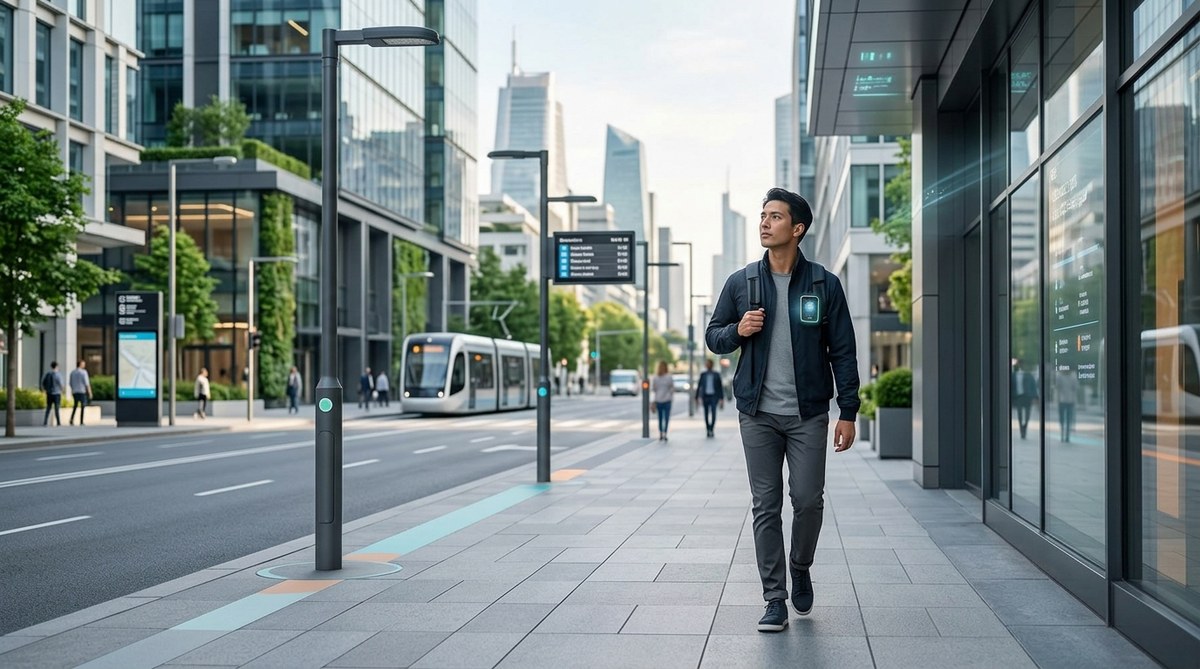
Navigating city streets can sometimes feel like solving a complex puzzle. Despite the proliferation of digital maps and navigation apps, understanding and utilizing environmental cues remains a vital skill for accurate urban wayfinding. In 2026, cities are evolving with smarter design elements and innovative cues that help both residents and visitors find their way effortlessly. Mastering these cues ensures you stay oriented, even when technology fails or signals are weak.
In 2026, effective urban wayfinding relies on recognizing environmental cues like landmarks, street patterns, and lighting. These cues help you navigate confidently through complex city layouts, reducing reliance on digital tools and enhancing exploration skills.
The significance of environmental cues in urban navigation
Environmental cues are the physical features and design elements that naturally guide people through city spaces. In 2026, smart urban planning integrates these cues to make navigation intuitive. They serve as mental signposts that help you determine where you are and where you need to go, even without a map or app. These cues include prominent landmarks, street shapes, lighting, colors, and even sounds.
Understanding how to interpret these signals is especially important as cities grow denser and more complex. They also foster a sense of familiarity and safety, making urban environments more welcoming for everyone.
How environmental cues shape effective wayfinding in 2026
Urban environments are rich with cues that can be harnessed for better navigation. Here are some of the most common and effective cues used today:
- Landmarks like statues, iconic buildings, or distinctive towers
- Street patterns and intersections
- Variations in lighting or pavement materials
- Color schemes and signage integrated into architecture
- Natural features such as parks, rivers, or green corridors
- Sounds like water features or street performers
By paying attention to these cues, you can develop a mental map that guides you seamlessly through the city. For example, noticing a distinctive clock tower on a main street can help you orient yourself or identify a particular neighborhood.
Practical steps to use environmental cues for better navigation
Here is a straightforward process to incorporate environmental cues into your urban exploration:
-
Observe your surroundings carefully
Take note of prominent landmarks, street shapes, and lighting. Pay attention to patterns that repeat or stand out. -
Identify and memorize key cues
Focus on a few distinctive features like a colorful mural or a unique building. Remember their locations relative to where you start. -
Use cues to triangulate your position
Combine several cues to determine your location. For example, a clock tower to your left and a river to your right can help you confirm your position. -
Adjust your route based on environmental markers
As you move, look for cues that match your mental map. If something looks different, reassess your position before proceeding. -
Repeat and refine your environmental awareness
Continually observe and update your mental map as you navigate. Over time, this improves your natural orientation skills.
Quick tips for using cues effectively:
- Focus on distinctive landmarks rather than generic features.
- Note changes in lighting or pavement as clues for direction.
- Use natural features like parks or rivers as navigational anchors.
- Recognize recurring signage styles or colors associated with districts.
Common mistakes to avoid in environmental wayfinding
Even with good intentions, some pitfalls can hinder your navigation efforts. Here’s a comparison to help clarify what to watch out for:
| Technique | Mistake to Avoid |
|---|---|
| Relying solely on a single landmark | Assuming one cue is enough; always cross-reference cues |
| Ignoring environmental changes | Not noticing new signage or altered landmarks after urban updates |
| Misinterpreting cues | Confusing similar-looking buildings or signs |
| Neglecting context | Using cues without understanding their significance in that area |
Being mindful of these mistakes helps ensure your navigation remains accurate and efficient.
Expert insights on environmental cues in urban wayfinding
“The key to effective urban navigation in 2026 lies in perceiving and interpreting a variety of environmental cues. Cities are intentionally designed with cues that guide us naturally, but it requires attentiveness and practice to use them confidently.” — Dr. Emily Carter, urban planning researcher
Techniques to sharpen your environmental awareness
To develop stronger environmental cues recognition skills, consider these methods:
- Conduct a mini audit of your neighborhood, noting landmarks and street features.
- Practice orienting yourself without digital tools during walks.
- Study city maps to understand how cues are integrated into urban design.
- Participate in guided explorations to learn how professionals utilize cues.
Techniques and common mistakes table
| Technique | Mistake to Avoid |
|---|---|
| Visual scanning for landmarks | Overlooking subtle cues or relying only on major features |
| Connecting cues with geographic context | Failing to relate environmental features to overall city layout |
| Practicing in different environments | Only familiar areas; expand to diverse districts |
| Using environmental cues in tandem | Relying on one cue when multiple cues provide better orientation |
Leveraging urban design for better wayfinding
Cities are increasingly incorporating environmental cues into their design to facilitate navigation. From colorful street furniture to distinctive lighting, these features help residents and visitors orient themselves with ease. Urban planners can enhance this by:
- Designing landmarks that stand out and are easy to recognize
- Using consistent color schemes to denote districts
- Incorporating natural elements like parks and waterways as navigational anchors
- Ensuring signage aligns with environmental features for seamless guidance
Moving beyond technology: the timeless value of environmental cues
While digital maps are invaluable, relying solely on technology can be limiting. Environmental cues offer a resilient, low-tech way to navigate. They are always present, accessible, and can be more memorable than digital directions. Developing an eye for these cues turns city exploration into a more intuitive and engaging experience.
Final thoughts on mastering urban wayfinding cues in 2026
Getting comfortable with environmental cues transforms urban exploration from guesswork into confident discovery. Practice observation, connect cues with your mental map, and stay curious about your surroundings. With time, navigating even the most complex city streets becomes second nature.
Use these techniques to unlock a deeper understanding of your environment and enjoy a more immersive city experience. Remember, the city is full of signs guiding you—learning to read them enriches your journey and opens new avenues for adventure.
Harnessing the city’s signals for confident navigation
Urban environments are like living puzzles. When you tune into their signals, navigating becomes less about technology and more about instinct. Keep practicing, stay observant, and let the city tell its story through the cues it offers. Happy exploring!